July 27, 2026
Coaching Toward Purposeful Learning—First Classroom Visits
By Olivia Odileke
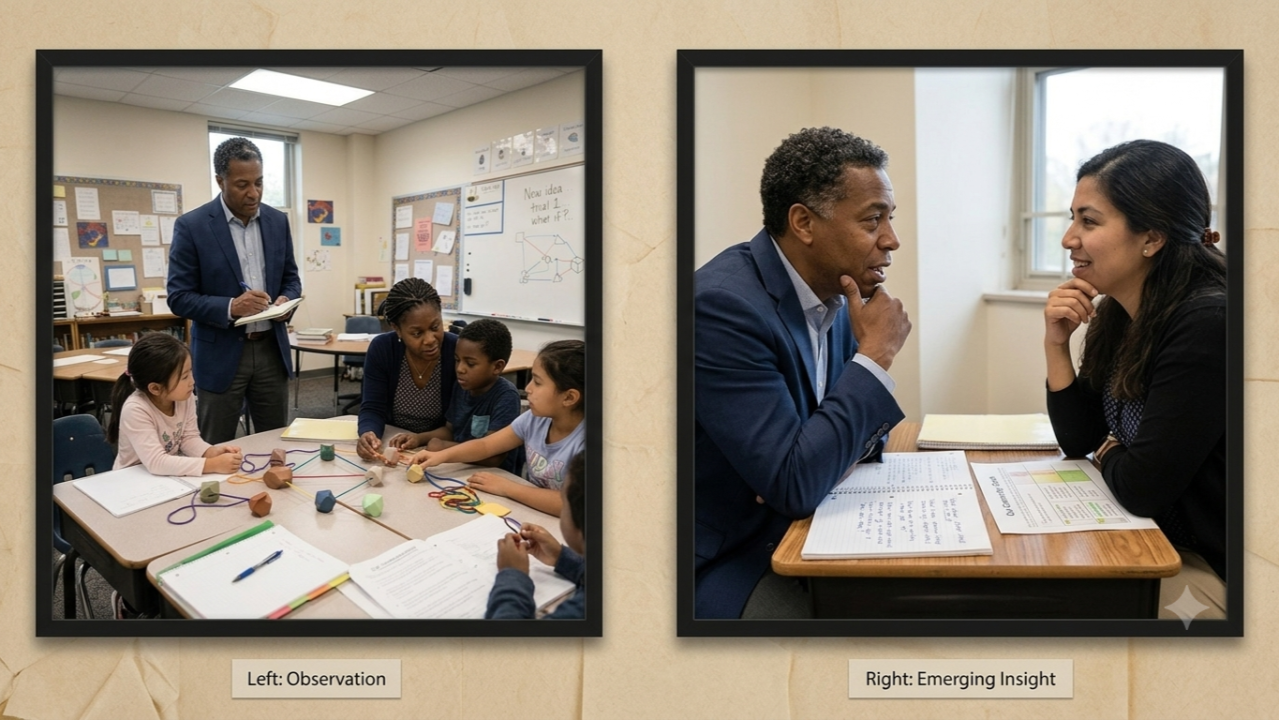
You're doing your first classroom visits of the year. Teachers are setting up their rooms. They're planning their first lessons. They're energized from the conference, ready to try new things.
And you're noticing something. Some teachers are thinking about purposeful learning. Some are going back to old patterns.
Your job now is coaching. Not evaluation. Coaching. Helping teachers see what purposeful learning actually looks like. Helping them understand the difference between keeping students busy and creating experiences where students think deeply.
What You Learned at the Conference
You remember Jonathan Kegler's session: "From Passive to Purposeful: Igniting the SPARK in Every Student." He talked about the difference between classrooms where students are passive (completing assignments) and classrooms where they're purposeful (wrestling with meaningful ideas).
Passive learning looks like efficiency. Students are on task. They're working. They're getting things done.
Purposeful learning looks messier. Students are asking questions. They're investigating. They're discussing. They're confused sometimes. But they're thinking.
The conference made you see the difference. Now you need to help your teachers see it too.
The Coaching Conversation You Need to Have
Your first classroom visit, you watch a teacher's lesson. The lesson is organized. Students are engaged. They're completing worksheets about the content.
After the lesson, you sit down with the teacher. You could evaluate: "Good job. Class was well managed."
But that's not coaching. Coaching is helping them see something.
So instead you ask: "Tell me about the thinking you were inviting students to do."
The teacher explains: "I wanted them to understand the main ideas, so I gave them questions to answer about the text."
Now you're in the coaching conversation. You can ask: "When students answered those questions, what kind of thinking were they doing? Were they remembering information? Or were they having to think about meaning?"
The teacher pauses. "Mostly remembering."
"I wonder what would happen if you asked questions that required them to think about why something matters, or how it connects to something they already know, or what it means. What do you think that would look like?"
Now the teacher is thinking. You're not telling her what to do. You're helping her see the difference between passive and purposeful.
Imagine This Scenario
You're in your second week of classroom visits. You've noticed a pattern. Some teachers are creating purposeful learning experiences. Students are asking questions. They're investigating. They're discussing ideas that matter.
Other teachers are creating efficient classrooms. Students are working. They're completing tasks. But they're not wrestling with meaningful ideas.
You decide to focus your coaching on this. In every post observation conversation, you're helping teachers think about the difference between passive and purposeful.
With one teacher, you notice she's asking questions that invite thinking. "I noticed when you asked 'Why do you think that happened?' students had to explain their thinking. That's purposeful. I also noticed you asked some questions where there's just one right answer. What if more of your questions required thinking like the first one?"
She nods. She sees it. She starts thinking about which questions invite thinking and which ones just check for recall.
With another teacher, you notice students are completing an assignment but not really thinking. You ask: "What's the meaningful idea you want students to wrestle with in this unit?"
He pauses. "I want them to understand photosynthesis."
"And if students understand photosynthesis, what would they be able to think about or do?"
He thinks. "I guess I want them to be able to explain why plants need energy and where it comes from."
"So if that's what you want them to think about, what kind of experience would help them think deeply about that? What if instead of a worksheet, they investigated how plants respond to light?"
Now he's imagining purposeful learning. You're not telling him. You're helping him see the connection between the learning goal and the kind of experience that develops that thinking.
Why Coaching Matters in August
August is when you set the tone. Teachers are energized. They're ready to try new things. They're watching to see what you value.
If you evaluate and grade lessons, you're saying: Follow the rubric.
If you coach toward purposeful learning, you're saying: I want to help you create experiences where students think deeply. I'm going to help you see what that looks like.
That coaching matters. It shapes the culture all year.
The Leadership Move
The move is shifting from evaluation to coaching. In every classroom visit, you're not grading. You're helping the teacher see something. You're asking questions that help them think about the difference between passive and purposeful.
And you're connecting it to what they learned at the conference. Jonathan Kegler showed them what purposeful learning looks like. Now you're helping them create it in their own classrooms.
The Leadership Pause
In your classroom visits, are you evaluating or coaching? Are you helping teachers understand the difference between keeping students busy and creating experiences where they think deeply?
That difference is everything. And your coaching in August sets the tone for the whole year.
Learn more in Chapter 8 of The Question-Driven Principal: Leading Instructional Improvement Without Being the Content Expert
Further Reading:
Knight, J. (2007). Instructional Coaching: A Partnership Approach to Improving Instruction. Corwin Press. Knight's work demonstrates that coaching focused on helping teachers think about their practice—rather than evaluation focused on judging it—creates sustainable improvement. Coaches who ask questions and help teachers see their practice differently have greater impact than evaluators.
Garmston, R. J., & Wellman, B. M. (2009). The Adaptive School: A Sourcebook for Developing Collaborative Groups (2nd ed.). Christopher Gordon. Garmston and Wellman's framework on cognitive coaching shows that questions that help people think about their thinking create deeper learning and change than directives or evaluation. This is especially true in the early stages of change.
Bring the Conference to Your Coaching
You sat in Jonathan Kegler's session on purposeful learning. You saw what's possible. You felt the energy of teachers realizing they could create classrooms where students think deeply, not just stay busy.
Now bring that to your coaching. In every classroom visit, help teachers see the difference. Use LEAD Spark Team (app.leadsparkteam.com) to document your coaching conversations. Track what teachers are trying. Capture evidence of purposeful learning emerging in your classrooms.
The conference showed you the vision. Your coaching brings it to life.
Lead Spark Team
See where your improvement process is actually breaking
In 30 minutes, look at what is working in your school, where walkthroughs and PLCs stop changing practice, and what one focused cycle would look like. No credit card. No prep required.