July 13, 2026
Designing Learning That Lives in Classrooms
By Olivia Odileke
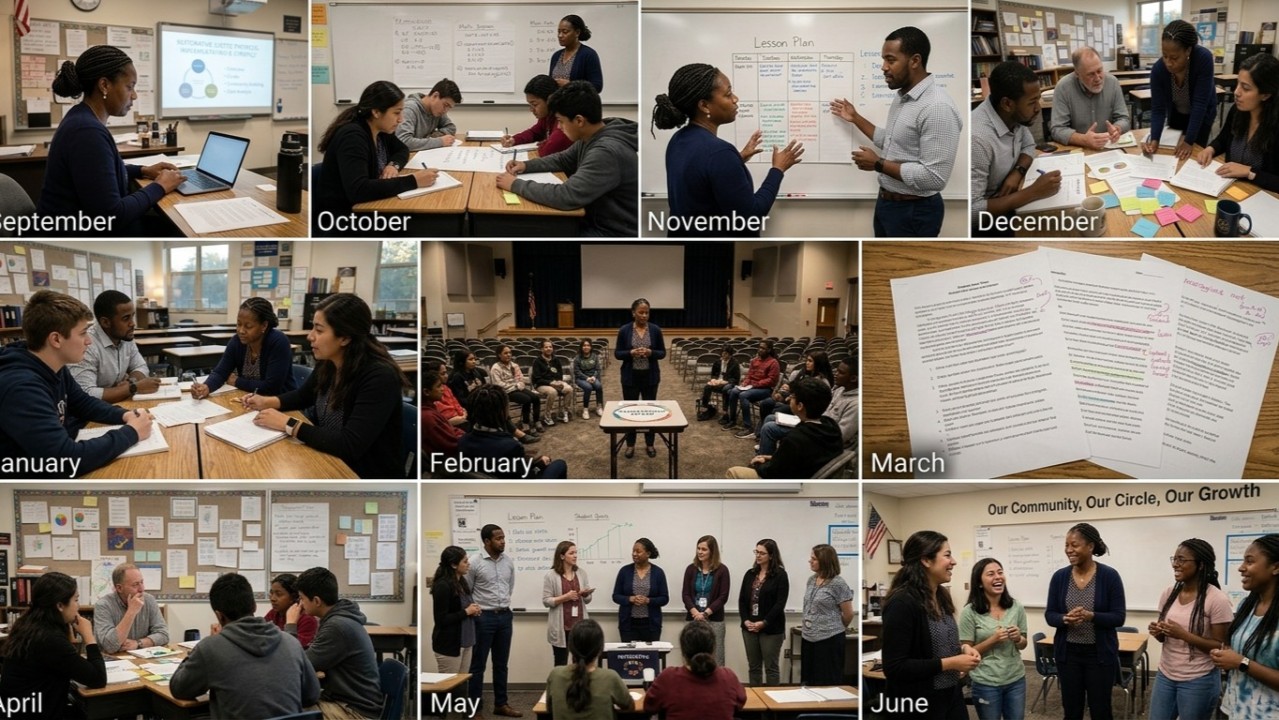
It's June. You're planning professional learning for next year. You have some money to spend. You could send people to summer conferences. You could buy a curriculum package. You could subscribe to an online learning platform.
But what if you designed your learning differently? What if the learning happened in classrooms, with your students, all year long?
Here's what that could look like:
The Framework: Practice, Reflect, Coach, Refine
Month One: Identify and Plan
Your team looks at evidence of student thinking. What evidence do you see that students are thinking deeply? What evidence is missing? What would help students think more deeply?
You decide on one high-impact instructional strategy that addresses that. You learn about it together. You understand the research. You understand what it looks like.
Months Two-Four: Practice and Reflect
Your team practices the strategy together. Each week, at least one of you teaches a lesson using the strategy. The others observe. You come back together and talk about what you noticed.
You're reflecting on evidence from your classrooms. What did students do? How did they think? What happened when you tried this specific move? What do you need to adjust?
Each week you're learning. Each week you're getting better.
Months Three-Six: Coaching and Refinement
A coach or instructional leader observes you teaching. Not to evaluate. To help you see something. "I noticed you asked an open-ended question and gave students three minutes to think about it. That wait time was powerful. I also noticed when the first student answered, you moved on. I wonder what would happen if you asked follow-up questions to push that student's thinking deeper."
You try it. You notice something different. You come back and share what you noticed.
The coaching is specific. It's about your practice. It's supportive. It's helping you refine.
Months Seven-Nine: Deepening and New Learning
By now, the strategy isn't new anymore. It's part of how you teach. You're using it naturally. Students are responding. You're seeing deeper thinking.
Your team reflects. What worked? What's part of your culture now? What do you want to go deeper on with this strategy?
And what's next? What other high-impact strategy would help students think even more deeply?
You start the cycle again. A new strategy. New learning. New practice.
Why This Design Works
This design works because:
It's connected to your context. You're not learning about student thinking in the abstract. You're practicing with your actual students.
It's iterative. You do it again and again. You get better each time.
It's supported. You have colleagues practicing together. You have coaching. You have time to reflect.
It's aligned. Everyone on the team is focused on the same thing. You're building a shared culture.
It's sustainable. Because by the time you move to the next strategy, the previous one has become part of how you teach. It doesn't fade away. It becomes the baseline.
Imagine This Scenario
You're an elementary school. You decide your focus for the year is helping students ask their own questions about what they're reading and learning.
September: You get trained on strategies for helping students ask questions. You learn about the research. You understand what deeper questioning looks like.
October-November: Your team practices. One teacher teaches a reading lesson where she models asking questions and then asks students to ask their own questions. Her colleague observes. They reflect together on what they noticed. The second teacher tries a similar approach the next week. The third teacher tries a different version. You're all learning what works.
A coach observes one of you. She gives feedback: "You did a great job slowing down and giving students time to ask questions. I noticed that when a student asked a surface level question, you answered it right away. I wonder what would happen if you responded with a follow-up question that pushed them to ask deeper questions."
December-January: You're getting better at this. Students are asking more questions. Some are starting to ask questions about meaning and connections, not just facts. You reflect on student work. You see the evidence that it's working.
February-March: This is becoming natural. You're not thinking about it as much. It's part of how you teach. You also notice something: students are not just asking better questions. They're thinking more deeply overall. They're wrestling with meaningful ideas.
Your team reflects. You've accomplished what you set out to do. Asking questions is part of the culture now.
April: You identify what's next. You want students to dig even deeper. You decide to focus on helping students explain their thinking and defend their ideas.
May-September: You practice a new strategy. Same cycle. Practice. Observe. Reflect. Coach. Refine.
By June of next year, students in your school are asking their own questions AND explaining their thinking AND defending their ideas. All of this is part of the culture because you designed learning that lived in classrooms, not in workshops or summer training.
How This Connects to the LEAD Spark Team Platform
This is exactly what the LEAD Spark Team platform supports. Teacher teams planning together. Identifying the high-impact instructional strategy they want to practice. Teaching it. Observing each other. Reflecting on evidence from their classrooms. Getting coached. Refining.
The platform helps you document what you're learning. See patterns. Notice progress. Celebrate when deeper student thinking becomes the norm.
The Leadership Move
The move is designing your professional learning for the year differently. Not as events and training. As cycles of practice in your classrooms.
Map out your year. What high-impact instructional strategies will your teams practice? When? How will you support them? How will you provide coaching? When will you reflect?
This doesn't have to be fancy. It can be simple. But it's intentional. It's connected to your context. And it's designed to create change that lasts.
The Leadership Pause
What if your professional learning for the whole year happened in your classrooms, with your students, with your colleagues practicing together?
What would change? How would your students be thinking differently by June?
Learn more in Chapter 7 of The Question-Driven Principal: Leading Instructional Improvement Without Being the Content Expert
Further Reading:
Desimone, L. M. (2009). Improving Impact Studies of Teachers' Professional Development: Toward Better Conceptualizations and Measures. Educational Researcher, 38(3), 181 to 199. Desimone's research identifies the characteristics of professional development that actually improve teaching and student learning: it's sustained over time, focuses on content, uses active learning, is coherent with school goals, and involves collaboration. One-time workshops lack these characteristics.
Opfer, V. D., & Pedder, D. (2011). Conceptualizing Teacher Professional Learning. Review of Educational Research, 81(3), 376 to 407. Opfer and Pedder's meta analysis shows that professional development is most effective when it's job-embedded, collaborative, focused on instructional practice, and sustained over time. Professional learning that lives in classrooms creates greater change than learning that happens outside of classrooms.
Join Us at the Spark Curiosity EDU Conference
This July, join educators and leaders from across the country at the Spark Curiosity EDU Conference. We'll explore how to design professional learning that lives in your classrooms all year long. See how teacher teams practice together, reflect on evidence, get coached, and refine until high-impact instructional strategies become part of your culture. Learn alongside Olivia Odileke and the Kampus Insights team.
Visit sparkcuriosityedu.com to register and learn more. Conference takes place at the end of July—the perfect time to plan your professional learning system for the school year ahead. Imagine a year where every month, your students are thinking more deeply, and your team is growing together with a common purpose.
Reflective Questions for Weeks 25 through 28
As you move through this month of focus on learning that lives in classrooms, consider:
- What is the difference between knowing about effective instruction and actually practicing it?
- What would change if you focused on one high-impact strategy for a full month instead of trying to implement many things at once?
- What does practice look like in your context? How much time do teachers have to practice together?
- How could coaching be structured to support practice instead of judge performance?
- What cycle of learning could you design that would help your team's practice improve throughout the year?
A Closing Mantra for July
Professional development is not an event. It's a practice. Great teaching spreads when teacher teams practice together, reflect on evidence from their classrooms, receive meaningful coaching, and continue refining until deeper student thinking becomes the expectation in every classroom, every day.
Let that guide your planning for the year ahead.
Lead Spark Team
See where your improvement process is actually breaking
In 30 minutes, look at what is working in your school, where walkthroughs and PLCs stop changing practice, and what one focused cycle would look like. No credit card. No prep required.