September 2, 2026
First Month Back—From Conference Energy to Sustainable Culture
By Olivia Odileke
August is almost over. School starts next week. You're about to step into the chaos of the first month of school. New students. New schedules. New challenges. New energy.
And you're worried. Not panicked. But wondering: Will the energy from the conference last? Will the coaching stick? Will teachers actually build this culture of purposeful learning we talked about?
Or will the busy-ness of school take over and we fall back into old patterns?
This is the real question. The conference gave you vision. The coaching in August started to shift things. Now you need to make it sustainable.
What You Learned (and What Matters Now)
At the conference, you experienced something. You saw a vision of what's possible. You heard from educators doing this work. You felt the energy of a room full of people committed to deeper thinking.
Olivia talked about installing collective collaboration. Jonathan showed you purposeful learning. Dr. Jamiylah talked about curiosity and AI. Fearless Educator Radio grounded you in music and emotion. Dr. Stephanie Barton reminded you that this work has to be culturally responsive. Miles Brown showed you how to help students find their voice.
It was all connected. All pointing toward the same thing: a culture where deeper student thinking is the expectation in every classroom, every day.
And you got it. You understood the vision.
Now the question is: How do you keep it alive through the busy-ness of September?
The Structure That Sustains Energy
The answer isn't motivation. Motivation fades. The answer is structure. You need to build structures that keep the work alive even when things get busy.
Here's what that looks like:
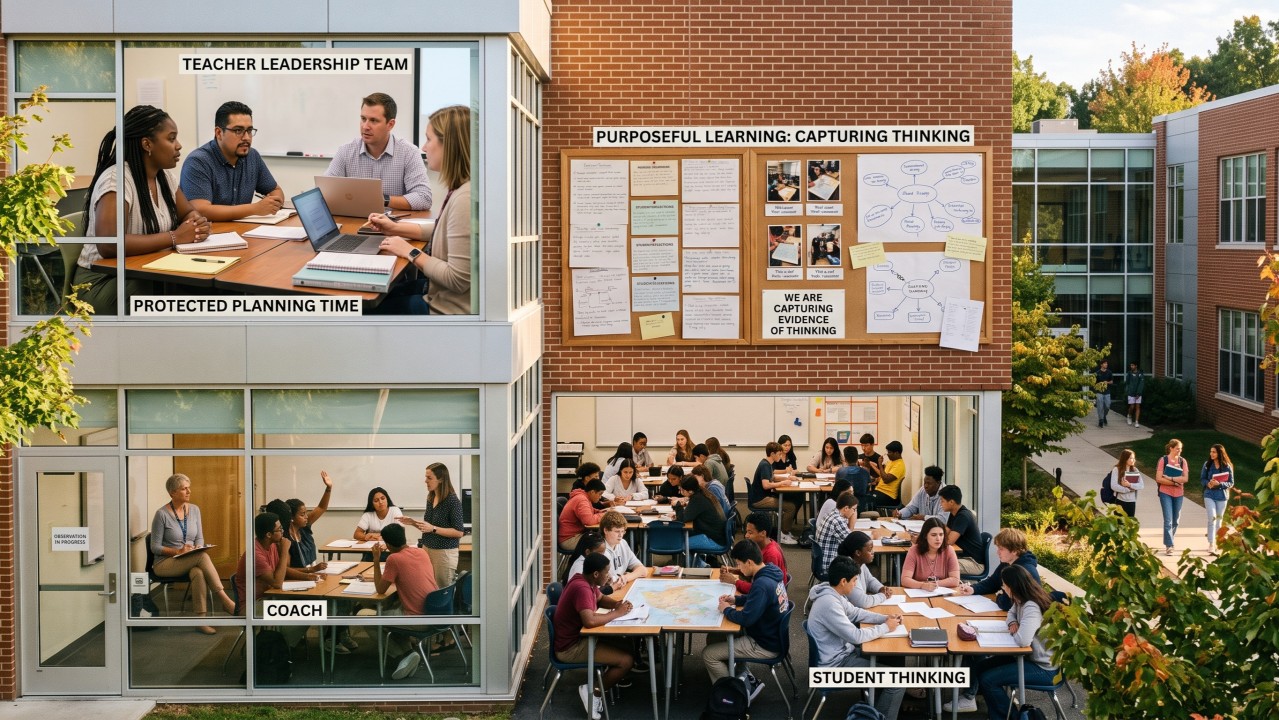
First, you protect time. Real time. Not stolen time. Time for teacher teams to meet together. Time to practice. Time to observe. Time to reflect. You put it on the calendar. You protect it like you protect instructional time because it is instructional time.
Second, you keep the coaching going. In September, with the chaos of school starting, coaching often stops. But you keep it going. Not as much as August. But steady. You're helping teachers maintain focus on the vision.
Third, you document the work. You're not just doing it. You're capturing it. You're seeing what's working. You're making the learning visible. You use LEAD Spark Team (app.leadsparkteam.com) to track your coaching cycles. To document evidence of purposeful learning. To see the patterns.
Fourth, you celebrate early wins. When you see purposeful learning happening, you name it. You celebrate it. You share it with other teachers. You're building a culture where deeper thinking is valued and visible.
Fifth, you connect everything back to the conference. The work you're doing isn't new. It's what Olivia talked about at LEAD Spark Teams. It's what Jonathan showed in Spark Classroom sessions. It's what the whole conference was pointing toward. You keep reminding people of that connection.
Imagine This Scenario
It's September 5th. School starts Monday. You're nervous that the conference energy will fade.
But you've built structure. Every Tuesday afternoon, grade level teams meet. Real time. They're looking at student work from the week. They're reflecting on evidence of purposeful learning. They're asking: Are students thinking deeply? Or are we keeping them busy?
A coach is working with each team one day a week. She's observing lessons. She's giving feedback. She's helping teachers notice what's working.
You're using LEAD Spark Team to document everything. Teachers document their observations. They capture student thinking. They track their coaching cycles. The system is visible.
In your first staff meeting, you don't pretend everything is perfect. You say: "The conference showed us a vision. That vision is real. That's our work this year. It's going to be hard some days. The busy-ness will pull at us. But we have time built in to think together. We have coaching. We have the platform to track our work. We have each other. That vision is worth protecting."
And teachers nod. They get it. They know the vision. They know the structure is there to support it.
By October, purposeful learning is becoming normal. Not everywhere. But in pockets. And those pockets are spreading because you've built structure to keep the focus alive.
Why This Matters
The conference was one moment. A powerful moment. But one moment. The real work is what happens after. The structure you build. The coaching you sustain. The culture you're intentionally creating.
Schools that sustain change aren't schools that get motivated by conferences. They're schools that build structures that keep the focus alive even when things get busy.
The Leadership Move
The move is building structures that sustain the conference vision. Protecting time. Keeping coaching steady. Documenting the work. Celebrating early wins. Connecting everything back to the conference vision.
That's how you take conference energy and turn it into sustainable culture.
The Leadership Pause
What structures do you need to build to keep the conference vision alive through the busy-ness of school? What will you protect? What will you track? What will you celebrate?
Those structures are what matter. They're what keep the vision real when the busy-ness pulls.
Learn more in Chapter 10 of The Question-Driven Principal: Leading Instructional Improvement Without Being the Content Expert
Further Reading:
Fullan, M. (2015). The New Meaning of Educational Change (5th ed.). Teachers College Press. Fullan's research on implementation emphasizes that sustainable change requires structures and systems, not just motivation or professional development events. He shows that schools that sustain change have built time, support systems, and accountability structures into their operations.
DuFour, R., & Eaker, R. E. (2008). Revisiting Professional Learning Communities at Work: New Insights for Improving Schools. Solution Tree Press. DuFour and Eaker demonstrate that schools that sustain improvement have embedded collaborative structures into how they operate. These structures ensure that focus and learning continue even through busy periods, because the work is built into how teams operate.
Sustaining Conference Energy Into Culture
The Spark Curiosity Conference just happened. You experienced a vision of what's possible. You learned from educators doing this work. You felt the energy.
Now sustain it. Use LEAD Spark Team (app.leadsparkteam.com) as your command center. Track your teacher teams' coaching cycles. Document evidence of purposeful learning. See the patterns. Celebrate the wins.
The conference gave you vision. The structures you build in August and September turn that vision into sustainable culture.
This is how you elevate your leadership practice. Not through inspiration alone. Through structure, coaching, and intentional culture building.
Reflective Questions for Weeks 29 through 32
As you move through this month of bringing conference energy into your leadership, consider:
- What systems do I need to install to make collective collaboration how we work?
- In my classroom visits and coaching, am I helping teachers see the difference between passive and purposeful learning?
- How am I coaching teachers to think responsibly about AI integration?
- What structures will keep the conference vision alive through the busy-ness of school?
- How am I using LEAD Spark Team to make our coaching cycles and learning visible?
A Closing Mantra for August
The conference gave you vision. Your leadership in August and September turns that vision into sustainable culture. Build the structures. Do the coaching. Document the work. Celebrate the wins. Make purposeful learning the expectation in every classroom, every day.
This is how you elevate your practice. This is how you transform your school.
Spark Curiosity EDU 2027
Build the plan together at Spark Curiosity EDU 2027
A two day experience for principals, assistant principals, and instructional coaches. Austin, May 6 to 7, 2027, and Fort Lauderdale, September 30 to October 1, 2027. Every participant leaves with a 45 day action plan for their school.