August 12, 2026
Installing Collective Collaboration—Building the System That Works
By Olivia Odileke
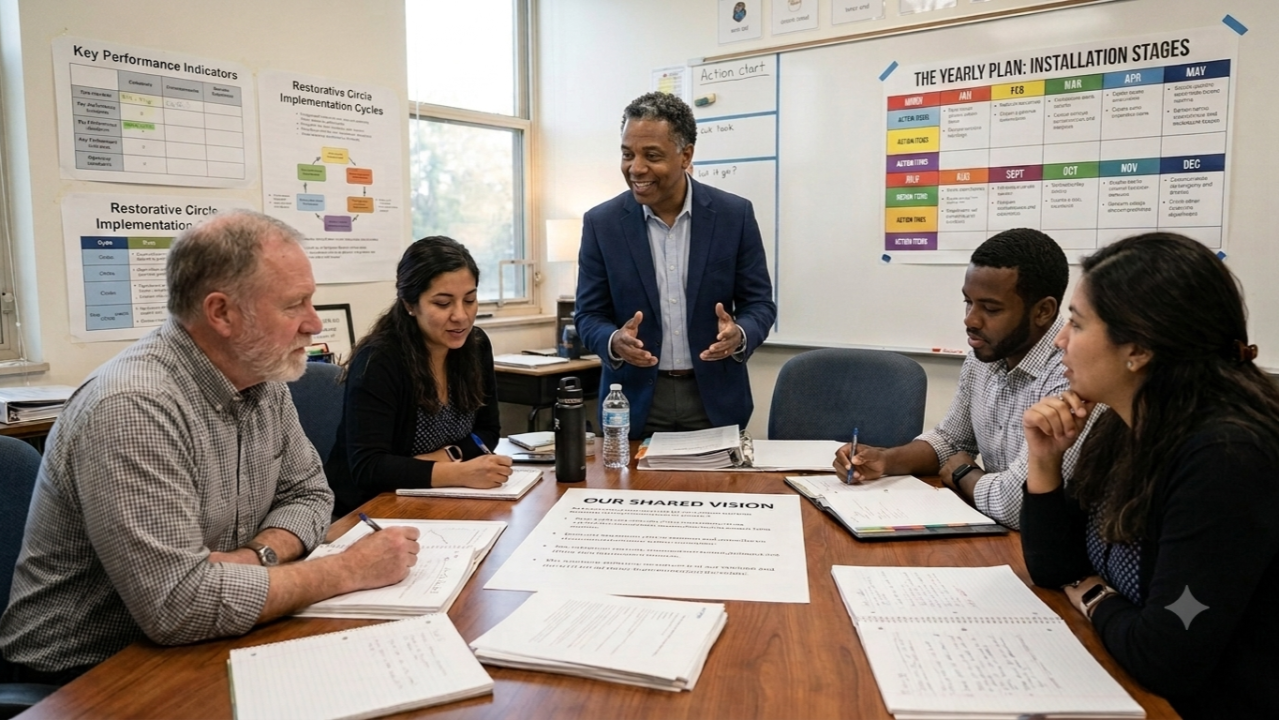
You're sitting in your first leadership team meeting of the year. Everyone is back. Everyone is energized from the conference.
And now comes the hard part. Taking what you learned and actually building it.
You remember Olivia's session on LEAD Spark Teams. She talked about installing a collective collaboration system. Not another initiative. A system. An operating system for how your school approaches improvement together.
You know what she meant. It's the difference between doing things the way you've always done them—initiatives come and go—and building a system where collaboration is how you work.
What You Learned at the Conference
In Olivia's breakout session, you saw how it works. Teacher teams with a shared vision of excellent instruction. Teams that practice together. Teams that reflect on evidence. Teams that get coached. Teams that refine their practice until it becomes the culture.
Not mandated. Designed.
It's different from what most schools do. Most schools introduce initiatives and expect adoption. This is different. This is building a system where the way you work together is the foundation.
Why Installing a System Changes Everything
Here's the difference between an initiative and a system:
An initiative is something you do. You implement a new strategy. You use new materials. You follow new protocols. And when the next initiative comes, the old one often fades.
A system is how you work. It's not about what you're doing. It's about how you're doing it together. It's the operating system. And systems persist because they're embedded in how people work.
When you install a collective collaboration system, you're not adding something on top of everything else. You're changing how decisions get made. How feedback happens. How learning occurs. How culture develops.
The Decision You Need to Make
In Olivia's session, she talked about this moment. The moment you get back and have to decide: Are we going to try to add this on top of everything we're already doing? Or are we going to make this how we work?
This is a real choice. Both have consequences.
If you try to add collective collaboration on top of existing structures, it stays small. It's nice. But it doesn't transform.
If you decide this is how you work, everything shifts. Budget shifts. Time shifts. Structures shift. And the culture transforms because collaboration isn't an add-on. It's foundational.
Installing the System: What This Looks Like
Installing a collective collaboration system means a few things:
First, your team aligns on the vision. Everyone is clear about what effective instruction looks like. You're using the same definition. You're seeing with the same eyes.
Second, you build in time for teams to practice together. Not time to attend trainings. Time to practice. Time to observe each other. Time to reflect.
Third, you create accountability for collaboration, not just for outcomes. Teachers aren't just accountable for results. They're accountable for thinking together. For documenting what they're learning. For refining their practice.
Fourth, you embed coaching. Not evaluation. Coaching. Someone (a coach, a lead teacher, the principal) is giving feedback that helps teachers see their practice differently.
Fifth, you document the work. You're not just doing it. You're capturing it. You're seeing patterns. You're making the learning visible.
Imagine This Scenario
You're planning how to launch this year. You decide: We're going to install collective collaboration as how we work. Not as a program. As our operating system.
You start with your leadership team. Everyone aligns on the definition of effective instruction. You talk about what you saw at the conference. You talk about what that looks like in your school with your students.
You map out the year. You decide what high impact instructional strategies your teams will practice. Not all at once. One at a time. But everyone is thinking about the same thing at the same time.
You set aside time. Real time. Not stolen time. Time for teams to meet, observe, reflect, and get coached.
You decide who will coach. Maybe it's you. Maybe it's an instructional coach. Maybe it's teacher leaders. But coaching is embedded in the work.
And you decide how to document it. You use LEAD Spark Team (app.leadsparkteam.com) to track what's happening. Teams document their observations. They capture evidence of student thinking. They track their coaching cycles. The system becomes visible.
By September, this isn't a new initiative. This is how you work.
Why This Matters Right Now
You're about to start a new school year. You have a choice about what kind of year it will be. You can go back to how you've always done things. Or you can install a system that actually changes culture.
The conference gave you the vision. Now you need to install the system that makes it sustainable.
The Leadership Move
The move is making the decision: Is collective collaboration how we work? And then building the structures that make it real.
This takes intentional leadership. It takes clarity. It takes protecting time. It takes getting people aligned.
But it's how you build a school where deeper student thinking becomes the expectation in every classroom.
The Leadership Pause
What would it feel like to walk into your school in June and see collective collaboration embedded in how you work? Not as a program. As the operating system?
What would your teachers notice? What would students experience?
That vision is possible. It starts now, in August, with the choice to install a system instead of introduce another initiative.
Learn more in Chapter 8 of The Question-Driven Principal: Leading Instructional Improvement Without Being the Content Expert
Further Reading:
Senge, P. M. (1990). The Fifth Discipline: The Art and Practice of the Learning Organization. Doubleday. Senge's framework on learning organizations emphasizes that sustainable change requires embedding learning systems into organizational structure. Systems persist because they're how work gets done, not because they're constantly promoted.
Schmoker, M. (2006). Results Now: How We Can Achieve Unprecedented Improvements in Teaching and Learning. Association for Supervision and Curriculum Development. Schmoker demonstrates that schools that embed collaborative systems into their operations—making collaboration how teams work, not something added on—see sustained improvement in both teaching quality and student learning.
Bringing Conference Energy Into Your Leadership
You just experienced the Spark Curiosity EDU Conference. You saw Olivia's vision for collective collaboration. You learned from Jonathan Kegler about moving from passive to purposeful learning. You experienced new thinking about AI and student voice.
Now bring that energy into your leadership. Use LEAD Spark Team (app.leadsparkteam.com) to install the system. Document your team's vision. Track your collaborative cycles. Capture evidence of deeper student thinking. Build the culture you just learned about at the conference.
The momentum is real. Let's make it sustainable.
Lead Spark Team
See where your improvement process is actually breaking
In 30 minutes, look at what is working in your school, where walkthroughs and PLCs stop changing practice, and what one focused cycle would look like. No credit card. No prep required.