July 22, 2026
Learning Happens in Cycles, Not Workshops
By Olivia Odileke
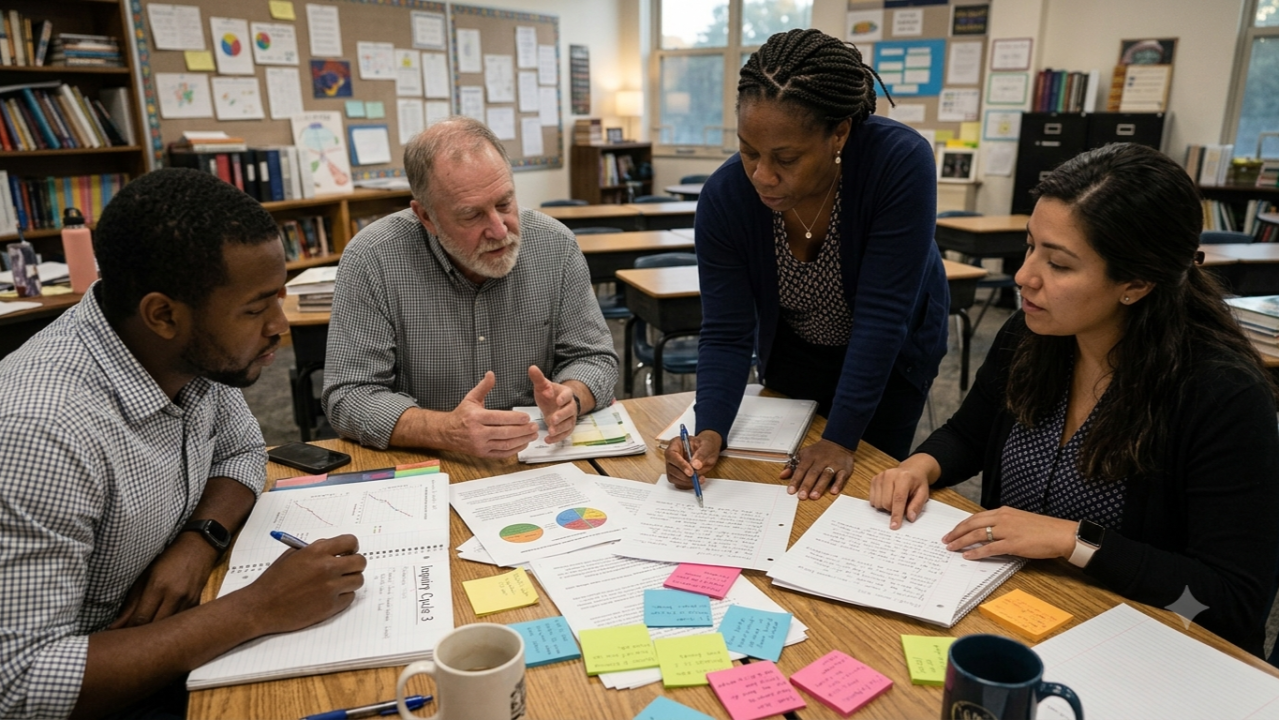
You're planning your professional learning for next year. You have a budget. You could send teachers to a conference. You could bring in a presenter. You could subscribe to an online course.
But imagine this instead:
You start with one thing. One high-impact instructional strategy that would help your students think more deeply. Your team decides together what that one thing is. Not five initiatives. Not a new curriculum and new assessment and new classroom management system. One thing.
The team plans. You identify what deeper student thinking looks like in your subject or grade. You choose a strategy that creates conditions for that thinking. You make a plan for how you'll practice it together.
Week one, you all try it. Some of you teach lessons using the strategy. Some of you observe. You all come back together and talk about what you noticed. What worked? What was confusing? What did students do? How did they think differently?
Week two, you adjust based on what you learned. You try again. Maybe the teacher who observed last week teaches this week. Maybe the teacher who led last week observes. You're both practicing. You're both learning.
Week three, you look at student work together. You're looking for evidence of deeper thinking. Are students questioning? Are they investigating? Are they solving problems? Are they reflecting?
Week four, a coach or colleague observes one of you and gives you feedback. Not evaluation. Feedback. "I noticed you asked open ended questions here. Students had to think. I also noticed you moved to the answer pretty quickly when a student struggled. I wonder what would happen if you waited longer."
You adjust. You try again.
By week eight, this strategy isn't new anymore. It's becoming normal. You're not thinking about it as much. It's part of how you teach.
And your students are thinking more deeply. Because you haven't just learned about deeper thinking. You've practiced creating conditions for it. Again and again. Until it became natural.
Why Cycles Work
Here's what's different about cycles:
First, they're small. One strategy. One focus. Not overwhelming.
Second, they're connected to your context. You're not learning about a strategy in the abstract. You're practicing it with your students, in your classroom, on topics they're studying right now.
Third, they're iterative. You try something. You notice what happened. You adjust. You try again. Each cycle, you get better.
Fourth, they're supported. You're not alone trying something new. You have colleagues practicing together. You have a coach giving feedback. You have data from your students showing whether it's working.
Fifth, they're cyclical. It's not a one-time thing. You do the cycle again. You go deeper. You refine further.
Imagine This Scenario
You're a middle school language arts teacher. Your team decides to focus on something specific: helping students ask their own questions about what they read.
Week one, you teach a lesson where you model asking questions about a text. You show students how you ask questions that help you understand deeper. Then you ask them to try. They ask some questions. Some are surface level. Some go deeper. You notice which students get it right away and which ones struggle.
You come back to your team. "Here's what I noticed. Some students asked questions about what happened. But very few asked questions about why or how. I wonder if I need to teach them the kinds of questions that lead to deeper thinking."
Your colleague teaches next. She starts by showing students different types of questions: questions about facts, questions about meaning, questions about relationships. Then she has them practice. She notices students do better when they can see the different question types first.
You try it again the next week, using what you learned. You add the question types. Students ask deeper questions.
You look at student work. You're collecting evidence. How many students are asking questions about meaning? How many are going beyond facts?
A coach observes you. She notices you're doing great at modeling questions. She also notices that when a student asks a surface level question, you sometimes answer it right away instead of asking the student to dig deeper. "What if you responded to their surface question with a follow-up question that pushed them to think more deeply?"
You adjust. You try it. It works.
By week eight, asking your own questions isn't something students are struggling with. It's becoming natural. They're reading and naturally wondering about meaning and relationships. They're asking questions that make them wrestle with ideas.
Your team looks at student work from this month. The difference is clear. Students are thinking more deeply.
And this is just one cycle. Next month, you focus on something else. But students and teachers have already experienced what deeper thinking looks like. You build on that. You keep going.
Why This Matters for the Culture You're Building
Remember our definition: great teaching spreads because teacher teams develop a shared vision of excellent instruction, intentionally practice one high-impact instructional strategy together, reflect on evidence from their classrooms, receive meaningful coaching, and continue refining their practice until it becomes part of the culture.
Cycles are exactly how this happens. Not events. Cycles. Month by month. Year by year. Building a culture where deeper student thinking is the expectation in every classroom.
The Leadership Move
The move is designing learning in cycles instead of events. Pick one thing. Design a four-week or eight-week cycle where your team practices together, reflects on evidence, gets coached, and refines.
Then do another cycle. Then another.
Over a year, you've done six cycles. Your team has intentionally practiced six high-impact strategies. Your students are thinking more deeply. Your culture is changing.
The Leadership Pause
What would it feel like to focus on one thing for a full month? To practice together? To see the evidence that it's working?
What would your students be thinking about differently?
Learn more in Chapter 7 of The Question-Driven Principal: Leading Instructional Improvement Without Being the Content Expert
Further Reading:
Senge, P. M. (1990). The Fifth Discipline: The Art and Practice of the Learning Organization. Doubleday. Senge's framework on learning organizations emphasizes that sustainable change comes through cycles of learning and reflection, not one-time events. He argues that organizations that engage in repeated cycles of practice, reflection, and refinement develop organizational learning that compounds over time.
Fullan, M. (2015). The New Meaning of Educational Change (5th ed.). Teachers College Press. Fullan demonstrates that implementing change effectively requires ongoing cycles of planning, implementation, reflection, and refinement over months and years. One-time professional development does not lead to sustained change in practice or improved outcomes.
Join Us at the Spark Curiosity EDU Conference
This July, join educators and leaders from across the country at the Spark Curiosity EDU Conference. We'll explore how to design learning in cycles instead of events. See how to structure your team's practice so that high-impact instructional strategies become part of your culture, not another initiative. Learn alongside Olivia Odileke and the Kampus Insights team.
Visit sparkcuriosityedu.com to register and learn more. Conference takes place at the end of July—the perfect time to design your learning cycles for the new school year.
Lead Spark Team
See where your improvement process is actually breaking
In 30 minutes, look at what is working in your school, where walkthroughs and PLCs stop changing practice, and what one focused cycle would look like. No credit card. No prep required.