June 1, 2026
Making Instructional Expectations Visible
By Olivia Odileke
A principal watches a lesson. Students are working on a math task. Some students finish quickly. Some are stuck. Some are doing something different from what the teacher intended.
The principal asks the teacher afterward: "What were you expecting students to do with that task?"
The teacher explains. And the principal realizes: Students have no idea what the teacher was expecting.
The expectations exist in the teacher's head. Not in the room where students can see them.
The Invisibility of Expectations
One of the most common problems in classrooms is that expectations are invisible. The teacher knows what she expects. But students have to guess.
A teacher assigns a paragraph. But what makes a good paragraph? Is it length? Grammar? Specific ideas? Organization? Students guess.
A teacher asks students to explain their thinking. But what does explaining actually look like? Is it one sentence? Three sentences? Specific evidence? Students guess.
When expectations are invisible, students are guessing. And some are guessing right. Some are guessing wrong. And none of them really know.
What Happens When Expectations Are Invisible
When students don't know what's expected, a few things happen.
Some students play it safe. They do the minimum. They don't take risks.
Some students try to read the teacher's mind. They do what they think the teacher wants instead of what actually demonstrates understanding.
Some students get frustrated. They don't know what's expected so they can't meet expectations. They blame themselves.
And some students get lucky. They guess right. But they don't really know why it was right. They can't replicate it.
None of these are good outcomes. And they all come from the same root: expectations that are invisible.
Making Expectations Visible
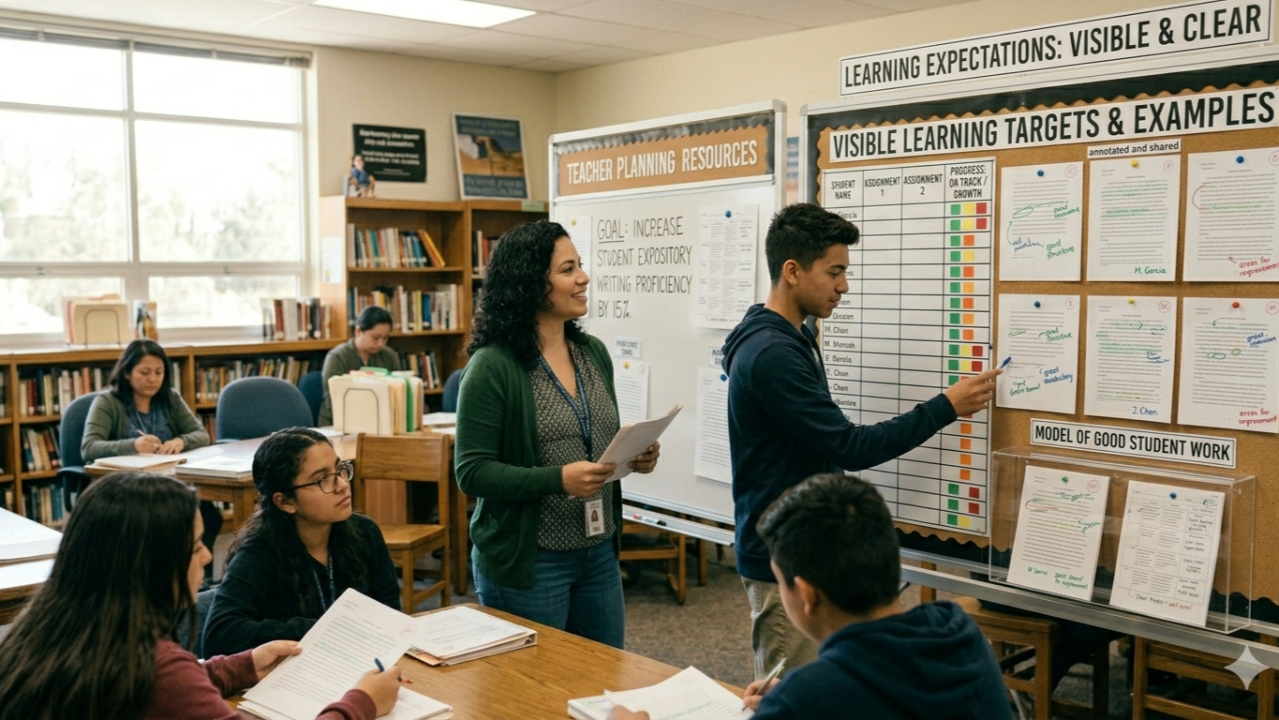
Making expectations visible means showing students what you expect. Not telling. Showing.
You might show a model. "This is what a well organized paragraph looks like." Students can see the organization.
You might show multiple examples. "Here's one way to explain your thinking. Here's another way. Here's what all of these have in common."
You might create a checklist together. "What would we see in a good explanation? Let's look at some and see what's there."
You might annotate student work together. "Let's look at this explanation. What does this student do that shows they understood?"
The point is: students can see what's expected. Not guess. See.
How Visible Expectations Change Student Work
When expectations are visible, student work changes.
Students don't have to guess. They can look at the model and see what's expected. They can aim for that.
Some students still struggle. But now the struggle is about capability, not confusion. They understand what's expected. They're working toward it. They might not get there yet, but they know what they're aiming for.
And that knowledge changes everything. Because students can now think about how to improve instead of wondering what the teacher wants.
Visible Expectations in a Collective Collaboration System
In a system building collective collaboration, visible expectations become shared language.
When one school makes instructional expectations visible, other schools can see what good student work looks like. They can compare. They can ask themselves: "What are we expecting students to do? Is it the same? How is our expectation different?"
That conversation creates shared understanding across the district. Not because schools are copying each other, but because they're thinking together about what students should be able to do and what that actually looks like.
The Work of Making Expectations Visible
Making expectations visible takes time. It requires collecting examples. Analyzing them. Finding the patterns. Making the patterns clear.
But it's time well spent. Because visible expectations reduce anxiety. They create clarity. They allow students to focus on working toward something they can see instead of guessing what the teacher wants.
The Leadership Move
The move is helping teachers make their expectations visible. Not for evaluation. But to support student learning.
A leader might ask: "What are you expecting students to do in this task? How will students know what you expect? Can you show me what a strong response would look like?"
These questions help teachers clarify expectations. And the process of clarifying often reveals that expectations weren't as clear as they thought.
The Leadership Pause
Think about an assignment in your school. Can students see what success looks like? Can they look at a model and understand what's expected? Or are they guessing?
If they're guessing, the work of making expectations visible is worth doing. Because visibility is what allows students to meet expectations instead of just hoping they do.
Learn more in Chapter 6 of The Question-Driven Principal: Leading Instructional Improvement Without Being the Content Expert
Further Reading:
Wiggins, G., & McTighe, J. (2005). Understanding by Design (2nd ed.). Association for Supervision and Curriculum Development. Wiggins and McTighe's framework emphasizes that clarity about what students should understand and be able to do (understanding the target) is foundational to effective instruction. When expectations are visible to students, achievement increases significantly.
Fisher, D., & Frey, N. (2014). Checking for Understanding: Formative Assessment Techniques for Your Classroom (2nd ed.). Association for Supervision and Curriculum Development. Fisher and Frey demonstrate that when students have clear, visible understanding of learning targets and what success looks like, they can self assess and adjust their work, leading to greater independence and achievement.
Join Us at the Spark Curiosity EDU Conference
Ready to deepen your practice around question driven leadership? Join educators and leaders from across the country at the Spark Curiosity EDU Conference. We'll explore how curiosity, questions, and collective collaboration transform schools and districts. Learn alongside Olivia Odileke and the Kampus Insights team.
Visit sparkcuriosityedu.com to register and learn more.
Lead Spark Team
See where your improvement process is actually breaking
In 30 minutes, look at what is working in your school, where walkthroughs and PLCs stop changing practice, and what one focused cycle would look like. No credit card. No prep required.