October 7, 2026
Ninety-Five Percent
By Olivia Odileke
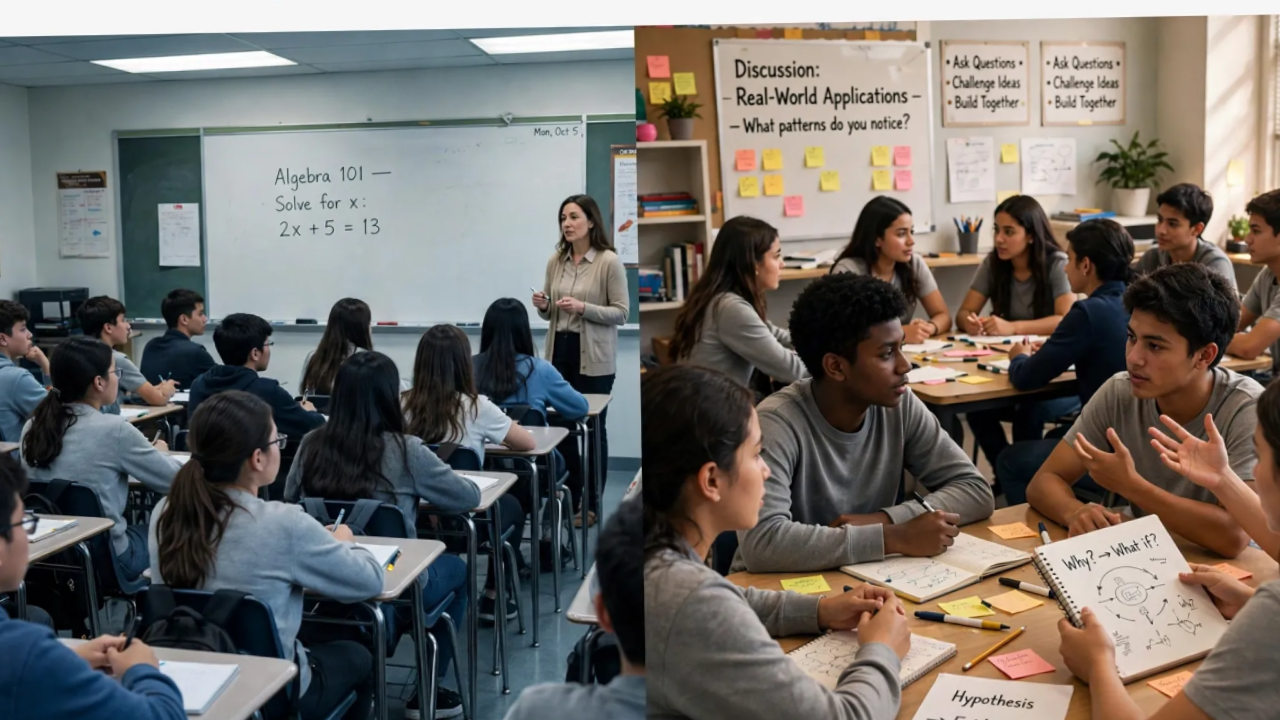
You want to know what shocked me most during those 1,200 classroom observations?
It was not the bad teaching. It was the quiet.
Students were compliant. They were working. They were filling out worksheets and copying problems and getting answers. But they were not talking about academic ideas. They were not debating. They were not explaining. They were not thinking out loud.
One teacher I observed asked a question about fractions. Three students raised their hands. She called on one. He gave an answer. She said, "Good. Everyone, write that down." And she moved on. In the entire class period, maybe six students spoke. The other twenty-eight were silent.
I asked students afterward what they were working on. Most could not tell me. They knew the procedure. They could do the steps. But they had no idea why they were learning it or what the concept actually was.
One student told me, "I'm just following the steps. I don't know what this means."
Another said, "I'm not good at math."
Another said, "This is not challenging enough for me, and I would like to be challenged more."
And the most honest one: "Why am I learning this?"
These are not rare comments. These are the comments I heard repeatedly in classroom after classroom.
What the Data Says (And Doesn't Say)
We talk about reading proficiency. We talk about math proficiency. The numbers are not good.
In 2022, only 35% of fourth graders were proficient in math. Only 34% were proficient in reading. For eighth graders, the numbers were similar. One-third of students meeting grade-level benchmarks. Two-thirds not.
We could look at those numbers and ask: What is wrong with our students?
Or we could ask: What is wrong with what we are asking them to do?
I observed some of the lowest-performing schools in the country. I also observed some of the highest-performing schools. The difference was not the students. It was not the resources. The difference was whether students were thinking or complying.
The Panic
Here is what keeps me up at night.
We have invested billions in data infrastructure. We have sophisticated dashboards. We analyze assessments. We attend data meetings. We look at progress monitoring reports. We have bought observation protocols and instructional frameworks and professional development programs and coaching models.
We have become incredibly sophisticated at SEEING what is wrong.
And nothing has changed.
We still have 95% lecture-based classrooms. We still have students who don't know why they are learning. We still have teachers giving students basic work because they say students can't do it, instead of scaffolding rigorous work and seeing what students actually can do.
The data infrastructure has not changed the teaching practice.
And that is the panic. That is the failure disguised as improvement.
Lead Spark Team
See where your improvement process is actually breaking
In 30 minutes, look at what is working in your school, where walkthroughs and PLCs stop changing practice, and what one focused cycle would look like. No credit card. No prep required.