August 24, 2026
Reflection as an Instructional Leadership Practice
By Olivia Odileke
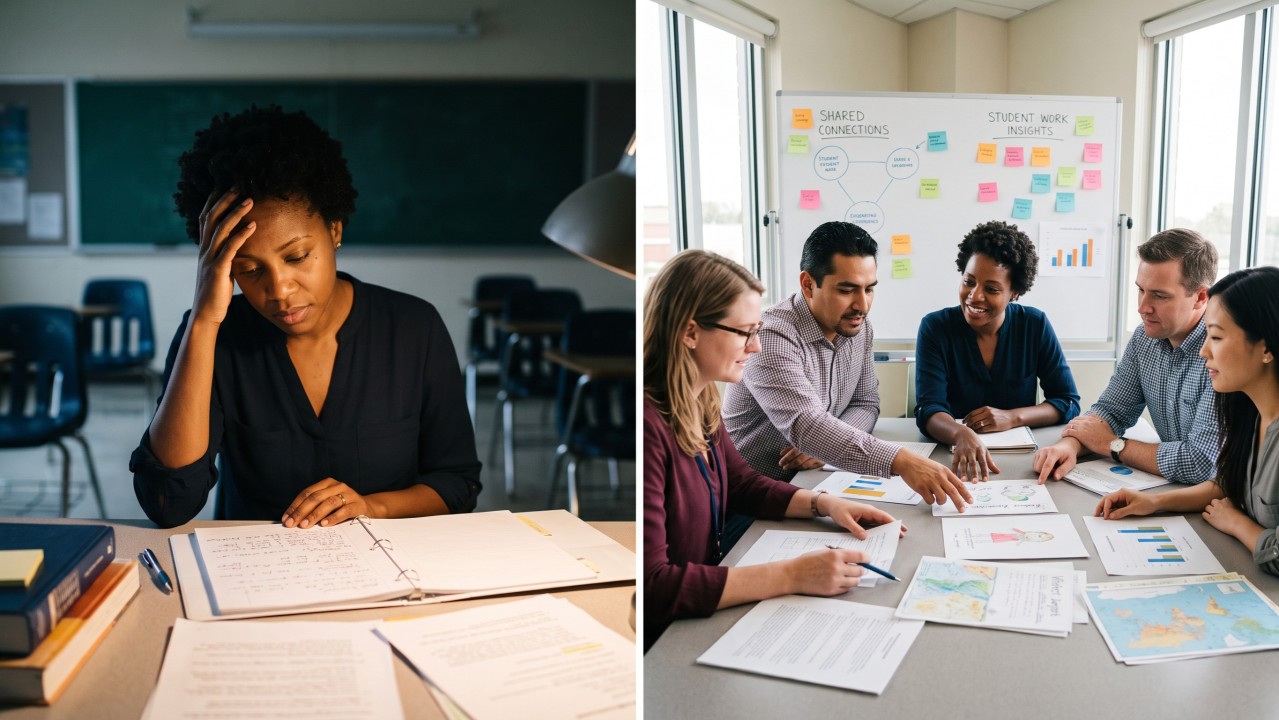
A teacher sends you an email. "I tried the open ended questioning like we talked about. It was really hard. Students didn't know how to answer. I'm not sure it's working."
You email back. You encourage her. You suggest she try again. You remind her it takes practice.
She tries again next week. She emails: "Better. But I'm still not sure."
And then the conversation stops. She tried. She reflected a little. And then she went back to what felt safer.
This happens in schools constantly. Teachers reflect. Alone. And the reflection doesn't lead anywhere because it's not connected to anything else.
What Reflection Actually Does
Here's what matters: Reflection alone doesn't create change. Reflection connected to action and evidence creates change.
When a teacher reflects alone, she's wondering. Am I doing this right? Is it working? Should I keep going?
When a teacher reflects with a team, connected to evidence and to others trying the same thing, it's different. She sees: I'm struggling. But so is Teacher B. And look at Teacher C. She broke through. Here's what she did differently. Let me try that.
That's collaborative reflection. And that's what creates change.
Imagine This Scenario
You're working with a team on open ended questioning. Three teachers are trying it. Each one struggles at first. Each one wonders if it's working.
But they're not reflecting alone.
Week one, they try. They come back to team meeting. They all share: Hard. Students didn't respond. Wondering if this is the right move.
You reflect together. You look at video. You notice: When Teacher C waits longer after asking the question, students answer. When Teacher A jumps in to help, students stop trying. The wait time is the thing.
Teacher A tries again with longer wait time. Teacher B tries with longer wait time. Teacher C keeps doing what she's doing.
Week two, they come back. Teacher A: "It worked! Students answered!" Teacher B: "Still struggling, but I see the difference now." Teacher C: "Mine went even deeper."
Now the reflection is connected. It's not individual wondering. It's collective learning. It's evidence based. It's action oriented. And it's creating change.
Why Individual Reflection Fails
Most schools have individual reflection built in. Teachers reflect on their practice. Teachers set goals. Teachers journal.
It's good. But it doesn't create change because it's not connected. Individual reflection happens in isolation. It doesn't connect to what other teachers are doing. It doesn't connect to evidence of impact. It doesn't connect to action.
Collaborative reflection is different. It connects:
- My practice to other teachers' practice
- My reflection to evidence of what's working
- My learning to our collective vision
- My action to our shared cycles
That connection is what creates change.
Imagine This Scenario
You're reflecting with your team on purposeful learning. You've been working on this for a month. Each teacher is trying something. Each teacher has been coached. Each teacher is reflecting.
But instead of individual reflections in individual notebooks, you're reflecting together. You're looking at evidence together. You're seeing patterns together.
You say: "Let's look at what happened this month. Teacher A worked on questioning. Teacher B worked on student discourse. Teacher C worked on problem based learning. What's the pattern?"
You look at evidence together. Student work showing deeper thinking. Coaching notes showing the moves that worked. Teacher reflections showing the shifts happening.
You see it: All three teachers are creating more purposeful learning. All three are moving toward the vision. All three are part of the same collaborative cycle.
Now the reflection isn't individual wondering. It's collective learning. And the momentum is powerful.
The Leadership Move
The move is creating structures for collaborative reflection. Not just individual reflection. Collaborative reflection that's connected to evidence, to coaching, to action, to your shared vision.
Ask yourself: How are we reflecting right now? Are we doing it individually? Or are we doing it together, connected to evidence?
If it's individual, the reflection won't create change. If it's collaborative and connected, it will.
The Leadership Pause
Think about the teachers who are trying new things. Are they reflecting alone? Or are they reflecting with colleagues, connected to evidence?
That difference determines whether the reflection leads to change or just stays as individual wondering.
Learn more in Chapter 9 of The Question-Driven Principal: Leading Instructional Improvement Without Being the Content Expert
Further Reading:
Schon, D. A. (1983). The Reflective Practitioner: How Professionals Think in Action. Basic Books. Schon's foundational work shows that individual reflection can lead to incremental improvement, but reflection connected to collective action and evidence creates transformative change. The difference is connection to collaborative cycles.
Timperley, H., Wilson, A., Barrar, H., & Fung, I. (2007). Teacher Professional Learning and Development: Best Evidence Synthesis Iteration. Ministry of Education, New Zealand. This synthesis demonstrates that reflection most powerfully influences practice when it's collaborative, connected to evidence of student learning, and part of ongoing cycles of practice and feedback.
See the Difference in 90 Days
Your teachers are reflecting. Alone. Wondering if things are working.
What if they could reflect together? Connected to evidence. Connected to each other. Connected to your collaborative cycles.
LEAD Spark Team makes collaborative reflection the norm. Teachers see what colleagues are learning. They see evidence of impact together. They reflect not alone, but as part of your improvement cycles.
Try the 90-Day Pilot for $1,400. Start at app.leadsparkteam.com. No delays. Just collaborative reflection that actually creates change.
Watch what happens when reflection connects to evidence, to coaching, to action. Watch how it transforms from wondering to knowing.
Lead Spark Team
See where your improvement process is actually breaking
In 30 minutes, look at what is working in your school, where walkthroughs and PLCs stop changing practice, and what one focused cycle would look like. No credit card. No prep required.