April 15, 2026
The Problem Elmore Named in 2000 That Most Schools Are Still Living in 2026
By Olivia Odileke
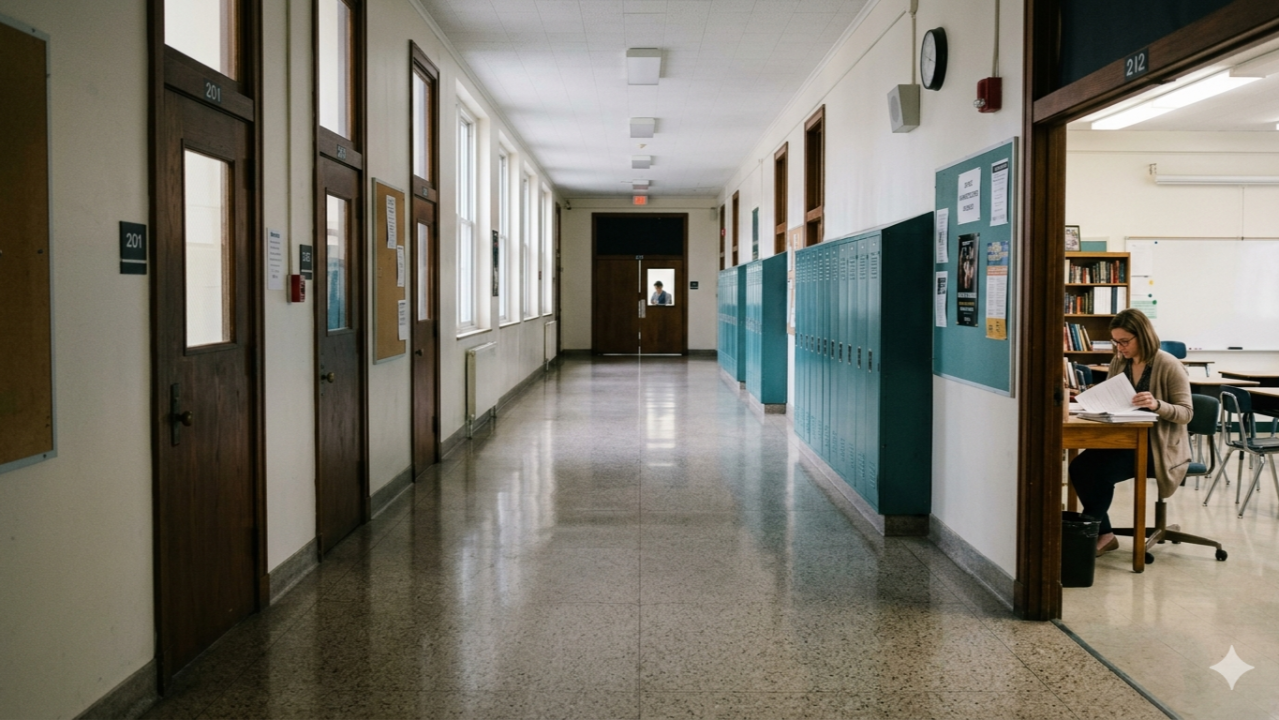
Richard Elmore didn't mince words.
In his monograph Building a New Structure for School Leadership , he argued that the single greatest barrier to improving student performance wasn't funding, wasn't curriculum, and wasn't teacher quality. It was isolation.
Too many teachers working alone. Too little opportunity to learn from each other, to build on what's working across classrooms, or to develop the shared belief that their collective effort actually moves students forward.
That was 2000. Twenty-six years later, walk into most schools and you'll find the same thing: a principal with a notebook full of walkthrough observations, a folder of exit ticket data, a spreadsheet tracking something and no reliable system for turning any of it into shared team action.
The problem Elmore named is still the operating reality for most schools. And that matters more than most district leaders realize.
Here's what the research actually says.
Collective teacher efficacy the shared belief among a faculty that their work together will make a meaningful difference for students has an effect size of 1.57 according to John Hattie's synthesis of thousands of studies. To put that in perspective, it outperforms socioeconomic status, prior achievement, and nearly every instructional intervention we've tried to scale.
A one-point increase in a school's collective efficacy score is associated with roughly an 8.5-point increase in student achievement even after accounting for race, income, and demographics.
This isn't soft culture work. This is the highest-leverage lever in a district leader's toolkit.
But here's the part that rarely makes it into the professional development catalog: collective efficacy isn't built through a keynote, a retreat, or a new curriculum adoption. Research points to four specific conditions that actually move it:
-
Teachers building instructional knowledge together not in isolation
-
Structured opportunities to collaborate around practice, not just logistics
-
Leaders who help teams interpret their results and see what's possible
-
Teachers having real influence over instructional decisions
Four conditions. All of them require a system. None of them happen by accident.
What I've learned from 15 years in Title I schools.
I've sat in hundreds of classrooms. I've watched brilliant teachers working harder than anyone should have to and still feeling like nothing was moving. Not because they weren't skilled. Because they were alone.
And I've watched what happens when that changes.
When a team looks at the same observation data together. When they name a specific instructional challenge not "engagement" broadly, but the precise thing that's happening between a teacher and students in the learning moment. When they agree on one practice, implement it together for six weeks, and then reflect on what they noticed.
The energy in the room shifts. Teachers start talking about what they saw in each other's classrooms not defensively, but curiously. The principal stops being the person who evaluates and starts being the person who facilitates. And the team starts to believe not because someone told them to, but because they have evidence that what they do together actually works.
That's collective efficacy being built in real time. And it doesn't require a consultant, a new program, or a budget line item. It requires a repeatable system.
The gap most districts are sitting in right now.
Most principals have observations. Most schools have data. Most districts have professional development calendars packed with good intentions.
What most schools don't have is a structure that connects all of it that takes what a principal sees in classrooms and turns it into a focused, research-backed practice that a whole team implements, reflects on, and builds confidence from together.
That gap between individual observation and collective team action is where student improvement stalls.
It's also exactly the gap that Lead Spark Team was built to close.
What would it look like in your schools?
I'm not going to pitch you here. But I will ask you one question to take into your next leadership conversation:
If your principals had a repeatable system one that took them from classroom observation to a focused team practice in a single cycle how many of your schools would look different by the end of this school year?
If that question is sitting with you, I'd love to show you what that system looks like in practice.
Olivia is the founder of Kampus Insights and creator of Lead Spark Team, an Action Research Operating System for K–12 schools. She has trained thousands of educators and conducted extensive classroom observations across Title I schools.
References
Bandura, A. (1993). Perceived self-efficacy in cognitive development and functioning. Educational Psychologist, 28 (2), 117–148.
Brinson, D., & Steiner, L. (2007). Building collective efficacy: How leaders inspire teachers to achieve. Washington, DC: Center for Comprehensive School Reform and Improvement. Retrieved from www.centerforcsri.org
Elmore, R. F. (2000). Building a new structure for school leadership. Washington, DC: The Albert Shanker Institute. Retrieved from www.aft.org
Goddard, R. D., Hoy, W. K., & Woolfolk Hoy, A. (2000). Collective teacher efficacy: Its meaning, measure, and impact on student achievement. American Educational Research Journal, 37 (2), 479–507.
Lead Spark Team
See where your improvement process is actually breaking
In 30 minutes, look at what is working in your school, where walkthroughs and PLCs stop changing practice, and what one focused cycle would look like. No credit card. No prep required.