March 11, 2026
Turning Student Results Into Practice Questions
By Olivia Odileke
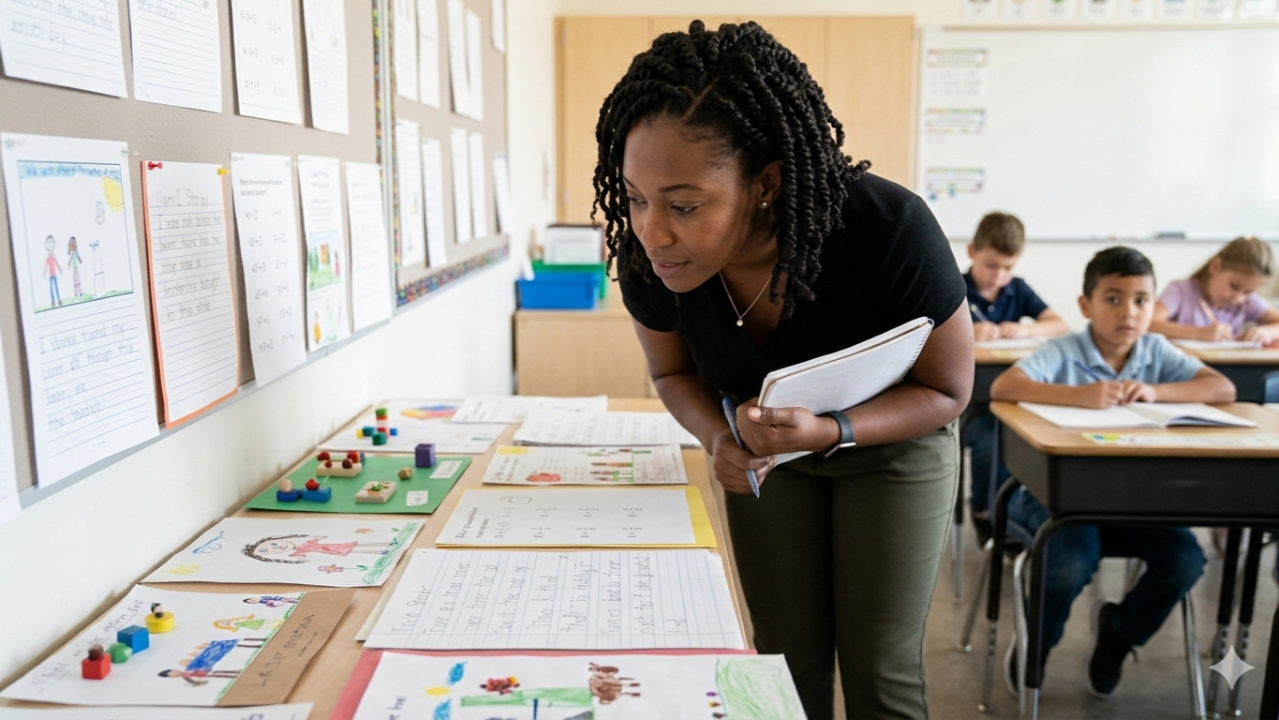
A principal gets fourth grade math assessment data. Students are struggling with multi step word problems.
Most schools stop here. A problem is named. An intervention is planned. Maybe students get extra practice with word problems.
But that's not where the thinking should end. That's where it should begin.
The outcome tells you where students landed. The real work is asking: why did they land there?
That question only has one answer if you look at practice.
From Problem Statement to Practice Question
There's a critical difference between a problem statement and a practice question.
A problem statement is usually something about students: "Students can't do multi step word problems." It's real. It's visible in the data.
A practice question asks about the conditions that might be creating that outcome: "What experience do students have with multi step word problems? How much time do they spend with them? What is the sequence of instruction? What support are they given? When they struggle, how do teachers respond?"
That's the question that changes everything.
Because when you ask practice questions, you start to see the design of instruction. You notice whether students are getting repeated exposure or one shot learning. You see whether they're expected to master decoding the problem before solving it, or if those skills are integrated. You notice whether there's a scaffold that's gradually released, or whether students are dropped into complexity without a bridge.
In a collective collaboration system, this distinction matters enormously. When you can describe the practice pattern that's producing a particular outcome, another principal in your district can look at their own instruction and say "Yes, we do the same thing" or "No, that's different from our practice."
Now you have the foundation for collective learning. You're not just sharing data. You're sharing understanding about practice.
How Practice Questions Change the Conversation
Here's what happens when you shift the conversation from "Students can't do X" to "What practice are students experiencing around X?"
The energy changes. It's no longer about failure. It's about understanding.
And understanding leads to thinking. If the practice is that students see multi step word problems only once a week in isolation from other math learning, and they're expected to solve them with minimal scaffold, a teacher might think "That could be part of why they struggle. What if we made word problems part of daily routine? What if we built the scaffold more gradually?"
That's the kind of thinking that changes practice. Not because there's pressure to improve outcomes. But because someone understood what they were doing and thought about how to change it.
And here's what matters for collective collaboration: once that change happens in one classroom or school, it's visible. Another principal in your district can see it. They can ask about it. They can think about whether it could work in their context.
That's how collective learning spreads.
The Question That Leads You to Understanding
The shift from problem to practice question is actually quite simple. It's one question: "What practice might be producing this outcome?"
Then you follow it. You observe. You talk with teachers. You look at student work. You ask "What are students actually doing when they're working on this?" You ask "What preparation did they get? What happens when they get stuck?"
You're trying to see the practice landscape that created the outcome.
It won't always match what you expect. Sometimes low performance on a test has nothing to do with the instruction on that specific skill. Sometimes it's about foundational knowledge students didn't get earlier. Sometimes it's about how the test is worded. Sometimes it's about confidence or engagement rather than understanding.
You can only know if you look.
Building a Culture of Practice Questions
In schools moving toward collective collaboration, this becomes a norm. When outcome data arrives, the first conversation isn't about what's wrong. It's about what practice might be producing it.
"Our fourth grade has low multi step word problem performance. What practice would we need to see to understand that?"
"What do students do every day with word problems?"
"How is problem decoding taught separately from problem solving?"
"What happens when a student gets stuck?"
These questions point toward observation. Toward looking at actual instruction. Toward understanding rather than judgment.
And when you understand, you can describe it. And when you can describe it, it becomes shareable knowledge across the district.
The Leadership Pause
The next time you see outcome data that raises a question, don't start by naming the problem.
Start by asking the practice question: What instruction are students experiencing that might produce this outcome?
Then go find out. The answer might surprise you. And the answer is where the real work begins.
Further Reading:
Schon, D. A. (1983). The Reflective Practitioner: How Professionals Think in Action. Basic Books. Schon's framework of reflective practice is foundational to moving from problem solving to inquiry based understanding. He argues that professionals who reflect on the conditions that produce outcomes, rather than jumping to solutions, are more effective at creating sustainable change.
Bryk, A. S., Gomez, L. M., Grunow, A., & LeMahieu, P. G. (2015). Learning to Improve: How America's Schools Can Get Better at Getting Better. Harvard Education Press. This seminal work on improvement science demonstrates that sustained improvement comes from understanding the systems and practices producing outcomes, testing small changes, and learning from the results over time. They emphasize practice change over outcome focus.
Lead Spark Team
See where your improvement process is actually breaking
In 30 minutes, look at what is working in your school, where walkthroughs and PLCs stop changing practice, and what one focused cycle would look like. No credit card. No prep required.