June 8, 2026
What Does Good Instruction Actually Look Like?
By Olivia Odileke
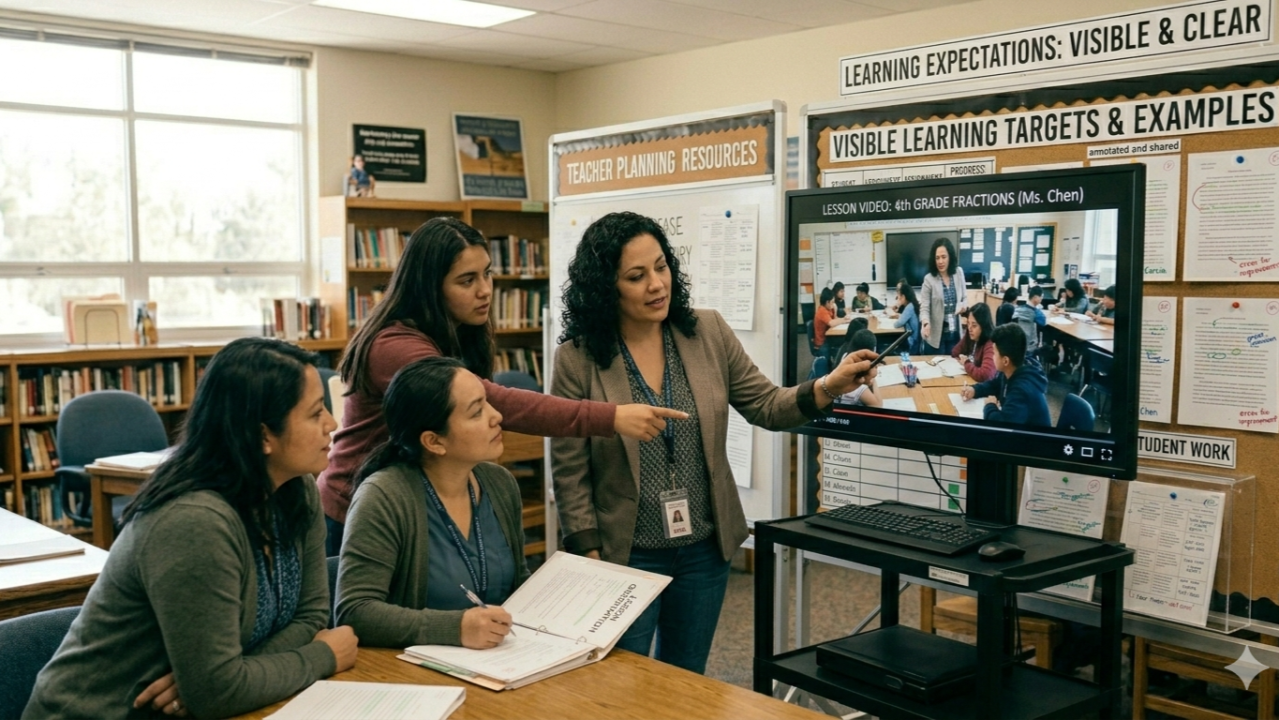
A principal is observing a classroom. The lesson is well organized. Students are engaged. They're working on the task. The room feels productive.
But the principal is wondering: Is this good instruction?
The students are busy. They're focused. But are they learning? Are they thinking? Are they being challenged?
It's hard to tell because "good instruction" isn't always obvious.
The Ambiguity of Good Instruction
Ask ten educators what good instruction looks like and you'll get ten different answers.
"Good instruction is clear and well paced."
"Good instruction has lots of student engagement and interaction."
"Good instruction challenges students to think deeply."
"Good instruction is joyful and builds relationships."
They're all right. But the ambiguity creates problems.
If good instruction can be anything, then teachers don't know what to aim for. Observers don't know what they're looking for. And improvement conversations become vague because people are looking at different things.
The Cost of Ambiguity
When "good instruction" is ambiguous, a few things happen.
Feedback becomes subjective. A principal might say a lesson was great. Another principal might say it needs work. Both are describing the same lesson.
Teachers don't know what to improve. If you don't know what good looks like, how do you aim for it?
Improvement conversations stall. Because people are talking about different things. Teacher A thinks the lesson was good because students were engaged. The principal thinks it was weak because students weren't challenged.
And in a collective collaboration system, schools can't learn from each other because they're not clear about what they're looking for.
Defining Good Instruction
The work of defining good instruction requires getting specific. Not vague values. Specific practices.
Not "good instruction is engaging" but "good instruction provides time for students to think, struggle, and generate their own ideas instead of just listening to the teacher explain."
Not "good instruction builds relationships" but "good instruction includes moments where the teacher checks in with individual students about their thinking and shows genuine interest in their understanding."
Not "good instruction is well organized" but "good instruction has a clear learning target, provides scaffolding that gradually releases responsibility to students, and includes time for reflection."
These are more specific. Not perfect. But specific enough that you could go into a classroom and look for them.
How Specificity Changes Observation
When you have a specific understanding of what good instruction looks like, observation changes.
Instead of forming a general impression, you're looking for specific things. You see them or you don't. You can be clear about what you see.
You might observe: "I noticed the teacher explained the concept for twelve minutes before students had time to engage with it. Students were listening but not doing much thinking. I wonder what would happen if students spent some time struggling with the concept first, before the explanation."
Now the feedback is specific. It's based on what you actually saw. And it points toward something that could be different.
Good Instruction in Different Contexts
Here's something important: good instruction might look different in different contexts.
Good instruction with sixth graders might look different from good instruction with twelfth graders.
Good instruction in algebra might have different features than good instruction in literature.
But within a context, you can define what good instruction looks like. And that definition becomes shared understanding. A guide. Not a straitjacket. But a reference point.
The Power of Shared Definition
When a school or district defines what good instruction looks like, something shifts.
Everyone is looking for the same things. Feedback becomes consistent. Improvement conversations become focused. Teachers know what they're aiming for.
And in a collective collaboration system, that shared definition travels. Other schools adopt it. They refine it. They think together about what it looks like in their context.
That's how a system learns together.
The Work of Defining Good Instruction
Defining good instruction requires getting specific. Looking at student work. Looking at videos of lessons. Talking about what you see. Finding patterns. Naming them.
It's not quick work. But it's foundational work. Because everything else builds on a shared understanding of what good instruction actually looks like.
The Leadership Move
The move is facilitating conversations where teachers define what good instruction looks like in their context. Not imposing a definition. Creating it together.
A leader might bring a video of a lesson and ask: "What do you notice about the instruction here? What's the teacher doing? What are students doing? What do you see that suggests learning is happening?"
Through that conversation, a shared definition starts to emerge.
The Leadership Pause
What does good instruction look like in your school? Can you describe it specifically? Would every teacher give you the same description?
If not, that's work worth doing. Because shared understanding about what good instruction looks like is foundational to improvement.
Learn more in Chapter 6 of The Question-Driven Principal: Leading Instructional Improvement Without Being the Content Expert
Further Reading:
Hattie, J. A. C., & Timperley, H. (2007). The Power of Feedback. Review of Educational Research, 77(1), 81 to 112. This meta analysis shows that feedback is most effective when it's specific and focused on what good performance looks like. Teachers need clear, specific descriptions of quality instruction to know what to aim for and how to improve.
Shulman, L. S. (1987). Knowledge and Teaching: Foundations of the New Reform. Harvard Educational Review, 57(1), 1 to 22. Shulman's foundational work on pedagogical content knowledge emphasizes that good instruction requires deep understanding of both content and how to teach it in ways that are specific to the subject and students. This requires shared definition and clarity about what good looks like in specific contexts.
Join Us at the Spark Curiosity EDU Conference
Ready to deepen your practice around question driven leadership? Join educators and leaders from across the country at the Spark Curiosity EDU Conference. We'll explore how curiosity, questions, and collective collaboration transform schools and districts. Learn alongside Olivia Odileke and the Kampus Insights team.
Visit sparkcuriosityedu.com to register and learn more.
Lead Spark Team
See where your improvement process is actually breaking
In 30 minutes, look at what is working in your school, where walkthroughs and PLCs stop changing practice, and what one focused cycle would look like. No credit card. No prep required.