May 27, 2026
When Leaders Stop Answering and Start Asking
By Olivia Odileke
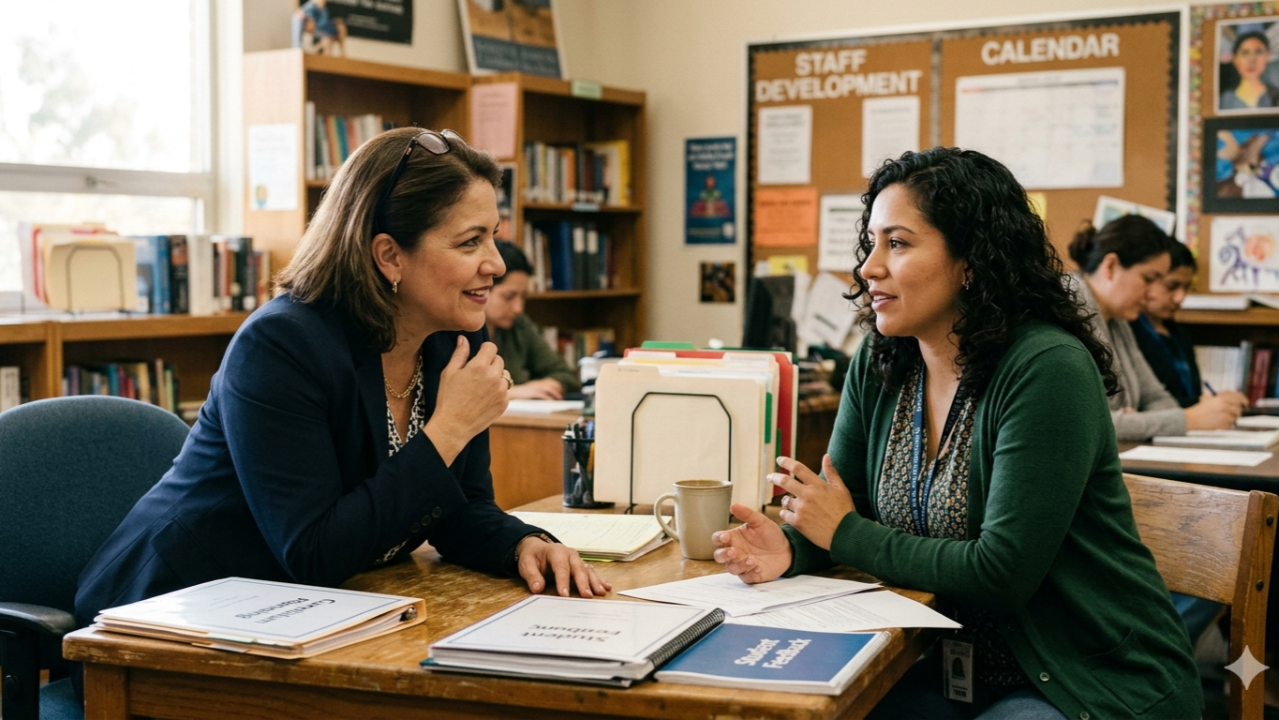
There's a moment that happens in many leadership conversations. A teacher brings a problem to a principal. The principal listens and then immediately offers a solution.
The teacher leaves with an answer. But she doesn't leave with thinking. The principal solved the problem. Not the teacher.
Now imagine a different response. A teacher brings a problem. The principal listens and says: "That sounds challenging. What have you tried? What do you think is at the root of this? What ideas do you have?"
The teacher has to think. She has to generate her own ideas. She has to own the solution.
The difference is profound. One conversation produces dependency. The other produces capability.
The Habit of Having Answers
Most leaders are hired because they have answers. They're experts. They know what good teaching looks like. They know what students need. They have solutions.
And when they become leaders, they bring that expertise. When a problem emerges, they solve it. When a teacher is struggling, they tell them how to improve. When results are low, they know what curriculum to implement.
It feels like leadership. It feels efficient. And it creates dependency.
Because when teachers get accustomed to the principal having the answers, they stop generating their own. They wait. They ask. They implement what they're told.
But they don't think.
What Changes When Leaders Stop Answering
The moment a leader stops immediately offering answers, something shifts.
Teachers have to think. They have to generate ideas. They have to wrestle with problems instead of just implementing solutions.
And that wrestling is where learning happens.
In a collective collaboration system, this becomes critical. Because when teachers are thinking through their own problems and generating their own solutions, they can share that thinking with other teachers. "Here's what I was noticing. Here's how I thought about it. Here's what I tried." That's knowledge that travels.
But "The principal told me to do this" doesn't travel. It doesn't deepen other teachers' thinking.
The Shift From Answer Giver to Question Asker
The shift is actually quite simple. It's resisting the urge to give an answer. It's staying curious instead.
A teacher says: "My students won't focus during independent reading."
The principal's first impulse is to solve: "Try shorter texts." "Build in more accountability." "Start with a focus question."
But instead, the principal asks: "When you say they won't focus, what does that actually look like? What are they doing instead? What have you noticed about which students focus and which don't? What patterns do you see?"
Now the teacher is thinking. She's observing. She's noticing things she hadn't noticed before. And out of that noticing, her own ideas start to emerge.
"Actually, I notice it's mostly the students who don't like to read. And I notice they focus better when there's a question to answer."
Now the teacher has generated an idea. It came from her thinking, not from being told.
Why This Matters for Sustainable Change
When a principal gives a teacher an answer, the teacher implements it. If it works, great. If it doesn't, she comes back asking what to try next.
But when a teacher generates her own ideas, something different happens. If the idea works, she takes ownership. She notices what's working. She refines it. She shares it.
If it doesn't work, she doesn't blame the strategy. She wonders about what might be different. She adjusts.
Because it's her thinking. She owns it.
And that ownership is what creates sustainable change. Not the strategy. The thinking.
The Discomfort of Asking Instead of Answering
For leaders who are used to having answers, this is uncomfortable. It feels like you're not leading. It feels like you're not helping.
But you are helping. You're helping teachers develop the capacity to think through problems themselves. You're building their expertise, not creating dependency.
It's slower at first. The conversation takes longer when you ask questions instead of give answers. But the thinking that emerges is worth the extra time.
The Question as a Leadership Tool
Questions are actually the most powerful leadership tool available. Because a question does something a directive never does: it invites the person to do their own thinking.
A directive tells you what to do. A question makes you wonder. And wondering is where change begins.
The Leadership Move
The move is catching yourself about to give an answer. And instead asking a question. Genuinely asking. Not a question where you already know the answer. But a real question where you're genuinely curious about what the teacher is thinking.
And then listening. Really listening. Because the teacher's thinking matters. And their thinking will lead somewhere you never could have mandated.
The Leadership Pause
Think about a conversation you had this week with a teacher. Did you give answers? Or did you ask questions?
What would have been different if you had asked one more question instead of giving that answer?
The answer you were going to give is still there. It's not going anywhere. But the question might have led somewhere neither of you expected.
And that's where real leadership happens.
Learn more in Chapter 5 of The Question-Driven Principal: Leading Instructional Improvement Without Being the Content Expert
Further Reading:
Schon, D. A. (1983). The Reflective Practitioner: How Professionals Think in Action. Basic Books. Schon demonstrates that professionals who reflect on their own practice (often prompted by good questions) develop expertise and adaptability. He argues that asking questions rather than providing answers is what develops professional judgment and sustainable change.
Aguilar, E. (2013). The Art of Coaching: Effective Strategies for School Transformation. Jossey Bass. Aguilar's work on transformational coaching shows that questions are more transformative than answers because coaches who ask questions help teachers generate their own solutions, leading to deeper learning and sustained change.
Join Us at the Spark Curiosity EDU Conference
Ready to deepen your practice around question driven leadership? Join educators and leaders from across the country at the Spark Curiosity EDU Conference. We'll explore how curiosity, questions, and collective collaboration transform schools and districts. Learn alongside Olivia Odileke and the Kampus Insights team.
Visit sparkcuriosityedu.com to register and learn more.
Lead Spark Team
See where your improvement process is actually breaking
In 30 minutes, look at what is working in your school, where walkthroughs and PLCs stop changing practice, and what one focused cycle would look like. No credit card. No prep required.